Pages

Showing posts with label Film Review. Show all posts

Friday, 19 May 2017

CG Artist's Toolkit Submission | 19/05/2017

Jetpack Jones 


Games Assets 


Film Reviews

World Animation | Film Review | Waltz with Bashir


"This extraordinary animated documentary by Israeli film-maker Ari Folman - a kind of fictionalised docu-autobiography - suggests that Israelis have indeed forgotten, in a kind of huge, willed amnesia" (Bradshaw, 2008) Not only that but Waltz with Bashir , focuses on the journey of a ex-fighter who has amnesia and PTSD and he is trying to find clues as to why he has the same nightmare over and over. The nightmare that he constantly has is that he can hear screaming, he can see people in despair but doesn't know why. The real reason that Ari is feeling like this is because 300 Christian militia was responsible for Mutilating about 3000 refugees from Beirut.

As the story progresses we start to see the story from many different people's perspectives. With each story the overall film becomes more grittier and real to the audience. Although as an audience it feels hard to 100% connect with the animation the characters, "they are still, "cut-outs" in which one limb might move while the rest remains static. The effect should be flat, but the low-tech style somehow conveys an emotional depth that catches you by surprise. The characters appear in two dimensions, yet are intensely human." (Bradshaw, 2008)


Combined together this animation makes for uneasy viewing. It is still amazing in it's own right and does provoke, although the film does catch it's audience unaware and really hits home the message when we are presented with the real life deaths of refugees at the end of them film. That made the film real, and in everyones minds; that bit more tragic.

Bibliography


Fig 1. Bradshaw, P (2008) Waltz with Bashir At https://www.theguardian.com/film/2008/nov/21/waltz-with-bashir-folman Accessed 18/05/2017


Image Sources


Fig 1. Waltz with Bashir [Film Still] At: http://www.rogerebert.com/reviews/waltz-with-bashir-2009 Accessed 18/05/2017


Fig 2. Water Walk [Film Still] At: http://www.filmwalrus.com/2014/03/film-atlas-israel-waltz-with-bashir.html Accessed 18/05/2017

World Animation | Film Review | Ethel and Ernest


Raymond Brigg's Ethel and Ernest (2016) is a heartwarming true story that follows the lives of his parents. Right from the point of meeting each other to there end of their life's.

Raymond Brigg's is best known for his animation and story 'The Snowman'  (1978). Not only did it become a well-loved classic, it was nominated for an Academy Award for the Best Animated Short Film. It would seem that Raymond Briggs loves christmas and things to do with it. This can be told by the fact that Raymond has released two other animations/stories both based upon Father Christmas. One is called 'Father Christmas' (1973) and then a follow-up called 'Father Christmas goes on Holiday' (1975)

As time moved on less and less was heard of Raymond until he released the charming Ethel and Ernest. The story of Ethel and Ernest takes us back to the late 1920's where Ethel and Ernest meet for the first time. Ethel before Ernest was a maid for a lady and believed that she would end-up in a middle class world and had the demeanour to go with it. Whereas Ernest stole her heart by arriving each day with some new milk for the lady and Ethel. After some visuals of each other, Ernest plucks up the courage and asks Ethel out, this goes well and leads to the marriage of the two. The two then have Raymond and bring him up in a quant little house in the London Suburbs.


The film touches upon several dark topics as we watch Ethel and Ernest live through the troubles of WWII. This includes seeing death, poverty and destruction everywhere. Not only that but they also have to allow Raymond to be evacuated to a safer place. Ethel and Ernest try to remain in good spirits throughout the story.

To be able to make true story seem like a well animated documentary, Raymond Briggs has certainly achieved a timeless piece that addresses more issues than his prior work.

Image Sources

Fig 1. Ethel, Ernest and Raymond [Film Still] At: http://www.radiotimes.com/news/2016-12-28/meet-the-cast-of-ethel-and-ernest Accessed 18/05/2017

Fig 2. Raymond being Evacuated [Film Still] At: http://www.dailymail.co.uk/news/article-3907080/Christmas-s-TV-hit-Snowman-author-RAYMOND-BRIGGS-moving-tale-parents-marriage.html Accessed 18/05/2017

Wednesday, 17 May 2017

World Animation | Film Review | Sita Sings the Blues

Fig 1. Sita Sings the Blues Film Cover


In order for a company of animators to create a 3d or even 2d animation it would take a large amount of time and perseverance to complete a film. Nina Paley manages to create a delightful and culturally fit film. By "Pairing aggressive visuals with art-history chops and anything-goes ideology, she’s made something universal and completely unique." (Fears, 2011)


The film in question is Sita Sings the Blues. It seems to be that people are divided upon their views on this film, as some feels it doesn't represent the Hindu religion properly, Unfortunately Paley suffered a lot of backlash for this animation because of these reasons and more. As Paley made Sita Sings the Blues on her own, she was the boss of all creative choices. This lead to her having a few different animations styles used throughout the film "Paley's penchant for mixing styles - slick computer animation, chicken-scratch comic-strip drawings, and rapid-fire photo collages - only underlines the myriad of methods for spinning the same yarn, though the musical vignettes court repetitiveness," (Fears ,2011) The mis-matching of music, as the animation was based upon a Hindu epic was unforgivable for some people.

Fig 2. Rama and Sita


Despite taking a brave approach which didn't pay off so well, there was a personal story of Nina interwoven into the story of Ramayana. Now this probably was the reason for the backfire as Nina is from America."Sita Sings the Blues' is based on an adaptation of the Ramayana, a Hindu epic, and some Hindus find the film offensive. Hinduism has a strong scriptural tradition of commentary and debate; there is often virulent disagreement," (Haas, 2011)


It can be argued that Nina received large amounts of backlash for associating her story of being betrayed by a man with the story of Ramayana. But despite all of the controversy around the creation of Sita Sings the Blues, if you stand back and watch it from an artist's perspective you can at least see this more of a piece of visual art, that is both widely risky but also daring and stunning. It can be seen as more of a visual marvel as it was one person who generated everything behind this film. It clearly took a lot of determination from Nina to remain resilient and still release the animation despite suffering large copyright implications. This of course meaning Nina does not make money from the film other than receiving donations from loyal fans to her work.


Bibliography


Fear, D. (2011) Sita Sings the Blues At: https://www.timeout.com/london/film/sita-sings-the-blues?icid=np--feature Accessed on: 15/05/2017


Haas, S. (2011) 'Sita Sings the Blues' Brings out the Bullies At: http://www.huffingtonpost.com/saumya-arya-haas/sita-sings-the-blues-brin_b_907914.html Accessed on:15/05/2017


Image Sources


Fig 1. Sita Sings the Blues [Film Cover] At: http://www.imdb.com/title/tt1172203/ Accessed 15/05/2017


Fig 2. Rama and Sita [Film Screenshot] At: http://dharma-records.buddhasasana.net/video/sita-sings-the-blues Accessed on: 15/05/2017


Tuesday, 16 May 2017

World Animation | Film Review | Spirited Away

Studio Ghibli has managed to produce a large array of timeless classics that have always stood out in our minds. Their special style of creating detailed animations with complex characters and themes to go with the complexity, has been some of the main reasons why Studio Ghibli is so beloved inside of Japan and the rest of the world. In term's of popularity in the western world Hayao Miyazaki's Spirited Away (2001) was the biggest success out of any of the film's created by this company.
Fig 1. Spirited Away Film Poster


It can be agreed that some of the success that followed Spirited Away was down to the mixture of both Eastern and Western influences, The western influences helped make western audiences be able to approach Spirited Away in a way that they could relate to unlike some other animes that might be otherwise confusing to a western viewer. "it's undoubtedly in a class and genre of its own: its alien, exotic qualities, all the more intense for a non-Japanese audience, are part of how extraordinarily pleasurable it is to watch" (Bradshaw, 2003)


"the fact that Miyazaki and his team hand-draw the images before they're digitally coloured and animated gives them an artistry that has been woefully lacking from so many recent American features." (Peters, 2015) Studio Ghibli itself proves over and over that there conventions for animating gives us beautiful and elegant animations. The elegance comes from the amount of effort and patience poured into each animation by Studio Ghibli's team.


Spirited Away doesn't just look incredible on screen, but also addresses a variety of different moral lessons that would align with the Japanese culture more than anything. The Moral lessons that stand out in Spirited Away is certainly that working hard and staying dedicated pays off, family come first and should always be cared for, others should be cared for too and that respect should be given to everyone especially those older than you. Chihiro is at first ignorant to all of the vital moral lessons and is impolite to everyone (Including her parents). She is also extremely stubborn at the start of the film. As the film progresses Chihiro learns to overcome any fears and becomes determined to rescue her parents from staying as pigs. Ultimately maturing and proving that love and respect are the foundations of growing up.

Fig 2. Chihiro Disappointingly looking at her Parents 


Not only does Spirited Away home in on moral messages but it also teaches one main moral message that resonates throughout Spirited Away. That moral message is that being greedy badly affects everyone. Throughout this film there is several clear metaphors of greed "Chihiro's parents fall eagerly upon the counter jammed with food and stuff their mouths...they eat so much they double or triple in size." (Ebert, 2012) This is the scene where Chihiro's parents become pigs after eating much like one. Greed in Spirited Away, when using the parent pigs as an example is clearly contagious. Anyone who partakes gets swallowed into darkness. Other examples throw themselves at us, one clear one that exists is No Face. No Face is a character in Spirited Away who absorbs the energy of his environment, be it bad or good. He becomes embodied by greed and hands out gold to everyone as the bathhouse where it contains several greedy people including Yubaba, The Evil Witch. Yubaba is responsible for stealing her employee's names so that they are bound to work in the bathhouse forever.

Fig 3. No Face (Greed Version) Offering gold


Overall, the tone and visuals of Spirited Away certainly marks a point in everyone's memory. It is a well-rounded masterpiece that acts as a eastern/western style hybrid animation. It can certainly be treasured with all ages and cultures.


Bibliography


Fig 1. Bradshaw, P. (2003) Spirited Away At: https://www.theguardian.com/film/2003/sep/12/spirited-away-review Accessed 14/05/2017


Fig 2. Peters, P (2014) Spirited Away Review Athttp://www.empireonline.com/movies/spirited-away/review/ Accessed 14/05/2017


Fig 3. Ebert, R. (2012) Spirited Away At: http://www.rogerebert.com/reviews/great-movie-spirited-away-2002 Accessed 14/05/2017


Image Sources


Fig 1. Spirited Away [Poster] At: http://www.filmandtvnow.com/blu-ray-review-spirited-away-its-an-adventure/ Accessed 14/05/2017


Fig 2. Spirited Away Film Review [Film Screenshot] At: http://omohide.com/1732/spirited-away-review/ Accessed 14/05/2017


Fig 3. Spirited Away [Film Screenshot] At: http://mefavoriteposts.blogspot.co.uk/2016/01/spiritrd-away.html Accessed 14/05/2017

Friday, 13 January 2017

Film Review | Narrative and Character | The Punisher

Fig 1. The Punisher Movie Poster
Jonathan Hensleigh's adaptation of Marvel's "The Punisher" was released in 2004.
Featuring Thomas Jane as Frank Castle and John Travolta as Howard Saint.

The movie acts as an origin story of "The Punisher", which much like the comic books, Frank Castle is an ex solider who loses his family because of murder. In the movie Frank goes undercover for his job in the police force to apprehend Bobby saint and his accomplice for dealing in guns. Frank gets shot during this deal whilst disguised as Otto. Bobby Saint also gets shot in the gunfight with the FBI. Although Frank lived because of his protective vest that shielded bullets, Bobby was not so lucky and died from his wounds.

It's the death of Bobby that brings the main opposing character to Frank Castle into play. This character is Howard Saint. Bobby Saint's Father. Howard discovers that Frank was not killed when undercover and hires a group of henchmen lead by Quentin and another Saint son, Howard's remaining son to eliminate Frank's family in their entirety including Frank whilst on holiday

Fig 2. Frank with his dead Wife and Son
When the whole of Franks family has been killed, Howard's son and crew advance on Frank and attempt to kill him by shooting him then exploding the floor he falls upon. This leaves them with the idea that Frank is finally dead and gone. The "witch doctor" saves Frank and treats all of his wounds and help him recover.

After travelling to the place it all happened, Frank gathers some guns and heads back to his home city where Howard and Co are. With anger in his belly he is ready to make everyone pay for what they did to his family. Frank is now at one with himself and now believes the old Frank died with his family, he is now "The Punisher"

Frank moves into an old dilapidated building that's got 3 other residents living there.
Frank doesn't really talk to anyone and attempt to kill himself many nights. He instead decides he wants revenge Howard Saint. With this he plans to rip everything out of Howard's life, much like he did to Frank.

It's very clever how Frank manages to pull this off. He organises it so that it appears Howard wife has cheated on him with his best friend. So obviously Howard kills them both. But not only that, Frank intends to go to Howard's main hub "Saints and Sinners" to kill anyone who was involved with the death of his family. It's a true bloodbath, many different deaths to many different men. Eventually Frank finds Howard's last remaining son and ties his hand to a grenade so that if he moves it will blow up. A few moments pass and it does explode but of course not before Frank finds Howard so he can witness Howard listening to his son die.

After all the trials and fighting, Frank finally got his man. revenge time. Or should we say punishment time.

Franks ties Howard to the back bumper of a car then puts a brick on accelerate. When the car speeds off we can see that each car is exploding as Howard reaches them. This sets him on fire and the camera cuts to a birds eyes shot of all of the exploded cars, leaving a clear punisher skull made out of the wreckage.

Fig 3. Car park after Howard's Death


Image Sources

Fig 1. The Punisher [Film Poster] At: https://fanart.tv/movie/7220/the-punisher/ Accessed 12/01/2017

Fig 2. Frank with his dead Wife and Son  [Film Screenshot] At:http://www.screengeek.net/2016/09/01/why-thomas-jane-never-actually-played-the-punisher/ Accessed 12.01.2017

Fig 3. Car park after Howard's death [Film Screenshot] At: http://www.screeninsults.com/punisher-the.php Accessed 12/01/2017


Film Review | Adaption and Transcription | The Shawshank Redemption

Fig 1. The Shawshank Redemption Movie Poster
We have had an array of wonderful movies that have already lived their life on a bookshelf
And then been brought back to life through the power of adaption. Adaption is the taking of one medium and re-telling the story through a different genre or lens. One film that specifically sticks out in terms of adapted movies would be Frank Darabont's adaption of Stephen King's novella 'Rita Hayworth and The Shawshank Redemption'  "It's not a horror film, rather a thumpingly good ode to friendship, hope, wit, wiles and wisdom, brimming with crackling characters and topped with the most twisteroo of twists since The Crying Game."  (Nathan, 2016)

Fig 2. Andy and Red conversing in the Prison yard


The Shawshank Redemption is a stunning movie that follows the betrayal of Andy Dufresne (Tim Robbins) and how he was sentenced to two life sentences wrongfully. Andy Dufresne never committed the crime, he never killed his wife and her lover. Nonetheless Andy get transported to the Shawshank Penitentiary where he meets Ellis Boyd Redding  'Red ' (Morgan Freeman). It's in the Shawshank penitentiary where Andy is used as a financial advisor to everyone in the prison, his job in prison is to be a library assistant to Brooks Hatlen. Eventually Andy gets offered to Lyell launder money for the warden.

Unfortunately even though the novella only has around 100 pages Frank has still managed to leave out some information from the film. There's some quite significant changes as well, for example Red was depicted in the books as a white Irish man, whereas in the movie Red is played by Morgan Freeman who is a black actor, but he still jokes about by saying he is Irish. Another huge change from the book to the movie is at the end of the movie once Andy has escaped. When the warden finds out about Andy's escape he resigns, whereas in the movie he clearly commits suicide via bullet to the brain. Andy is also described as a small, neat man within the book, but within the movie Andy is instead played by Tom Robbins who is a hefty 6 ft 5. One
of the hugest pieces of information was omitted from the movie is to do with the ending. Red in the book is supposed to get out of prison and find Andy's note to tell him to go to Mexico but the story ends before Red finds Andy. Whereas in the movie we all know that Andy meets Red in the beach in Mexico.

Despite omitting a fair chunk of information, The Shawshank Redemption also to adhere to a lot of its story from the novella. One mighty fine example is the lines from book are pretty much matched exactly in the film. It is Morgan Freeman who acts as the narrator as well. "It uses the narrator's calm, observant voice to include us in the story of men who have formed a community behind bars. It is deeper than most films; about continuity in a lifetime, based on friendship and hope." (Ebert, 1999) As it seems Frank Darabont stuck to his guns and ensured that the events in the film matched exactly to the novella somewhat. This means that there was not really any room to add anything to the source material.

One thing that has always been celebrated with The Shawshank Redemption is that it perfectly captures the themes of the source matierial. The themes that emanate from the source a belief of hope. It is about when there is nothing to hold on to, hope will give you something to strive towards. In point of fact the whole story is about hope and friendship over coming adversity and the film shows this magnificently.

Fig 3. Andy explaining no-one can touch your hope


Although strangely enough The Shawshank Redemption didn't do that well at the box office, on the other hand it did get 7 oscar nominations, gleaming reviews and many praises for the story and acting being so realistic and emotional.

Overall I feel like The Shawshank Redemption is a perfect adaption of its predecessor, Tim and Morgan steal the show and make it their own. Definitely a film to go down in history as one of the best adaptions.

Image Sources

Fig 1. The Shawshank Redemption [Film Poster] At: http://gbtimes.com/life/shawshank-redemption-out-parole Accessed 12/01/2017

Fig 2. Andy and Red conversing in the Prison yard [Film Screenshot] At: http://www.biography.com/news/shawshank-redemption-quotes-anniversary Accessed 12/01/2017

Fig 3. Andy explaining no-one can touch your hope [Film Sequence]  At: https://www.tumblr.com/search/shawshank%20redemption%20gif Accessed 12/01/2017

Quote Sources

Nathan, I (2016) The Shawshank Redemption Review At: http://www.empireonline.com/movies/shawshank-redemption/review/ Accessed 12/01/2017

Ebert, R (1999) The Shawshank Redemption At: http://www.rogerebert.com/reviews/great-movie-the-shawshank-redemption-1994 Accessed 12/01/2017


Thursday, 12 January 2017

Film Review | Quality Part 2: Exploitation | Mad Max: Fury Road


Fig 1. Mad Max: Fury Road Poster 

For years and years people have created movies that have exploited something to make money. Exploitation cinema tends to exploit things like: Sex, Violence, Natural Disasters, Creatures and Monsters and Gore. Usually these films will be low-end B-movies and therefore have a certain stigma about them. It doesn't stop there though sometimes there are even sub-genres that get their names from the fact that the films are from a specific nation. These are called Ozploitation films. Ideally ozploitation films are just films that exploit things that are set in Australia. A perfect example of an ozploitation film would be Mad Max and the most modern Mad Max: Fury Road (2015) directed by George Miller.

Mad Max: Fury road is a high-octane, thrilling ride. Which when all exploitation films are deemed as poor set Mad Max: Fury Road apart from the rest. George Miller aimed to properly capture all of the shots in the film rather than use CGI. "Max’s re-enfranchisement is a triumph of barking-mad imagination, jaw-dropping action, crackpot humour, and acting in the face of a hurricane." (Nathan, 2015) 

It's hard not to notice all of the stunning and hard work gone into the creation of the reboot of Mad Max. It's wonderful, right down to the littlest details. The score, the music and the sound effects truly bring it to life. "Every single sound, no matter how subtle or simple — from the simplest little footstep sound to a humpback whale — is considered, composed [and] orchestrated to have an affect on the audience." (Kim, 2016). One thing that must also be mentioned is the fact that the pounding music also comes from the drummers on the car and most pleasingly from the guitar/flamethrower toting maniac that that blast lurching and domineering riffs to motivate Immortan (Hugh Keays-Byrne) and his army of post-apocalyptic death vehicles.


Fig 2. The Coma-Doof Warrior

Forget about the blistering action and everything else that Mad Max: Fury Road offers and instead look further into the story and the roles of Max (Tom Hardy) , Furiosa (Charlize Theron). It's clear that the Feminism movement were pleased that it has evidently chosen Furiosa as a matriach for Feminism. Throughout the film we as an audience are able to tell that Max is obviously not the main character for this film. It is Furiosa.  "Furiosa is one of the toughest, most resilient action heroes in years, with a metal prosthetic arm that hints at past trauma and a steely gaze that sees more on the way". (Colin, 2015) It is her that is the driver of the rig and the one who is depicted as the controller of the whole group. 


Fig 3. Furisosa About to take aim


One of the most memorable scenes that prove this point is where they are trapped in the dark night whilst being pursued by The Bullet Farmer and others. One of the vehicles that is transcending upon the groups position is shining a piercing white light that it cutting throughout the darkness. Max attempts to put out the light by shooting it, he misses two shots. Furiosa takes over and hits the light first, bursting it and blinding The Bullet Farmer. Another quintessential part of feminism in this movie is when "There’s a scene in which the wives cut off iron chastity belts in a moment of liberation and disgust" (Valenti, 2015) 


Fig 4. Chastity belts have been removed by all


Overall i feel like this rendition of Mad Max is a brilliant way to bring back some original ozploitation to satisfy those people who love the Mad Max films. But at the same time it manages to spread itself to a wider and more diverse audience therefore in a way breaking loose of the stamp that is always applied to exploitation films.  

Quote Source List 

Nathan, I (2015) Mad Max:Fury Road review At: http://www.empireonline.com/movies/mad-max-fury-road/review/ Accessed on 11/01/2017

Kim, J (2016) 'Mad Max' sound designer Mark Mangini was inspired by 'Moby Dick' At: http://www.scpr.org/programs/the-frame/2016/02/02/46162/mad-max-sound-designer-mark-mangini-was-inspired-b/ Accessed on 11/01/2017

Collin, R (2015) Mad Max: Fury Road review: 'a Krakatoan eruption of craziness' At: http://www.telegraph.co.uk/film/mad-max-fury-road/review/ Accessed on: 11/01/2017

Valenti, J (2015) Sexists are scared of Mad Max because it is a call to dismantle patriarchies At: https://www.theguardian.com/commentisfree/2015/may/27/sexists-are-scared-of-mad-max-because-it-is-a-call-to-dismantle-patriarchies Accessed on: 11/01/2017


Image Source List 

Fig 1. Mad Max: Fury Road [Film Poster] At: http://www.comingsoon.net/movies/news/428175-madness-these-are-more-mad-max-fury-road-posters Accessed 11/01/2017

Fig 2. The Coma-Doof Warrior [Film Sequence] At: https://forums.ultra-combo.com/t/characters-you-wish-were-in-fgs-but-probably-never-will-be/3342 Accessed 11/01/2017

Fig 3. Furiosa taking aim [Film Screenshot] At: http://movieweb.com/mad-max-5-fury-road-sequel-charlize-theron-furiosa/ Accessed 11/01/2017

Fig 4. Chastity belts taken off by all [Film Sequence] At: https://www.buzzfeed.com/brente3/can-you-ace-this-very-difficult-mad-max-fury-roa-9xqk Accessed 11/01/2017


Wednesday, 11 January 2017

Film Review | Narrative Theory and Film Structure | Paul

Image result for paul film poster
Fig 1 Movie Poster
Inciting incident

The story of Paul begins with Clive Gollings (Nick Frost) and Graeme Willy (Simon Pegg) travelling around the U.S looking for famous UFO sites and visiting comic-con in their rented RV. Eventually the two reach the famous "Black Mailbox" where a black car speeds past and flips, in this car previously contained Paul (Seth Rogen). It happens that Paul is also an Alien. Paul explains how he needs Graeme and Clive's help so that he doesn't get killed, Graeme agrees to help Paul despite Clive already fainting and urinating himself.


Fig 2. Clive standing next to Black Mailbox
Lock-In

Soon after setting off with their new on board fugitive a mysterious black suited man called Agent Zoil (Jason Bateman) appears to investigate the scene and discovers the urine puddle made by Clive. Agent Zoil calls into base and receives orders to eliminate Clive and Graeme so that Paul can be apprehended.

First Culmination

There comes a point in the journey to drop off Paul where Paul quizzes Clive by asking "what his beef is". This is down to the fact that Clive has been irritable since Paul's arrival. From this conversation Clive admits to Paul that he is overly jealous of Graeme's and Paul's friendship , and that he is abnormally embarrassed that when he first met Clive he fainted and then went on to urinate himself. Paul jumps to attention and tells Clive that all of them are in it together. As Clive accepts what Paul has to say and with no arguments happening within the group, they are a robust team now.


Main Culmination

After a few action-packed events Paul and company manage to get to the pickup point. This is the spot where his alien friends are going to pick him up. The government have already managed to get to the rendezvous point and the leader for the government agency that Zoil works for appears. She is played by Sigourney Weaver (Alien Frontwoman). At this point it looks like everyone is going to die and fail their task.

Fig 3. Gunshot directed at crew
Third Act Twist

Ruth's father shoots a shotgun at Paul but Graeme takes the bullet  and dies. It's left
To Paul to try risk his life to save Graeme through the power of "cellular revivification" better known as healing... Paul appears to be dead after the procedure but is still alive, Graeme ends up getting the girl and Paul is saved and travels back to his home planet.

Image Sources

Fig 1. Interstellar (2014) [Film Poster] At: http://www.interstellarmovie.net/downloads.php# ( Accessed on 02.02.2017)

Fig 1. Paul (2011) [Film Poster] At: http://collider.com/paul-poster/ (Accessed on 11/01/2017)

Fig 2. Clive standing next to black mailbox [Film Screenshot] https://uk.pinterest.com/pin/498562621221224429/ (Accessed on 11/01/2017)

Fig 3. Gunshot directed at crew [Film Screenshot] At: http://www.wilsonwebb.com/paul-2011/ (Accessed at 11/01/2017)

Monday, 2 January 2017

Myth and A Hero's Journey | Film Review | Interstellar


Fig 1. Interstellar Movie Poster
Have you ever had the feeling like you're watching the same story recycled over a span of decades of films? It seems that after all this may not be just a instinctual feeling in the pits of your stomachs. It can in fact be backed up with theory, such famous theories have been thrown around over the years about mono myths and how they ultimately define the structure of a large collection of movies. The one theory that is certainly the most heard of and is potentially one of the best ways of categorizing and dissecting the layout of a movie. This theory is Joseph Campbell's 'A Hero's Journey.'. This theory categorizes a movie into  17 steps. The best way to describe these 17 steps would be to apply them to a modern day film to see if the codes and conventions of 'A Hero's Journey' can still be used.

The film I have chosen to review is Christopher Nolan's 'Interstellar.'.  Interstellar is a film in which the earth is dying and there is only one way that the human race can survive, find another inhabitable planet in which human life can thrive again. This of course means space travel, wormholes, relativity and a bucket load of emotions and action to help you stay gripped.

The Hero within Interstellar is Cooper (Matthew McConaughey), a former NASA engineer who lives on an earth that its ravaged by overwhelming dust clouds, where economy has failed and everything in the world as we know it is broken. Cooper has two children; Murph and Tom, their mother has passed and the rest dedicate their lives to growing crops for food to survive. This means engineers are certainly not needed. But when all Cooper wants to do is explore and help find a solution all he can do is remain, grow and harvest.

Murph, Cooper's Daughter who is 10 years old firmly believes that she is being communicated with by some sort of ghost. Cooper is suffering with some conflicts within himself that make him question the 'ghost' as real or fake, this is until a series of books fall off the shelf with no explanation, its from this point that Cooper realizes that this can be read and deciphered to be some type of code. Its within this scene that Cooper goes through his call to adventure, but swiftly after comes in his refusal to this call. This is due to his commitment to his family and their survival, therefore he tells Murph that it is what is trying to communicate is absolutely nothing and she should not worry.

Fig 2. Dust settling on Murph's floor


It's not until the area becomes engulfed with dust during a local baseball game that the code is discovered to be binary code, this is found within the dust particles within Murph's room. After deciphering the binary code it is revealed to be coordinates to an unknown location. It's at this location where Cooper discovers it to be NASAs place of work and that they are still in existence. Professor Brand (Michael Caine) still works for NASA and can still remember Cooper as a tremendous engineer and an excellent pilot. It is Professor Brand who can easily represent Cooper's supernatural aid.

Fig 3. Professor Brand Conversing with Cooper

Due to Cooper's Technical skills and previous piloting skills he may be the only hope mankind has of surviving. Professor Brand explains to Cooper that the earth is dying and it doesn't have long left. He also explains that if the human race is to continue Cooper and his crew must discover a planet that can sustain human life. Crossing the threshold for Cooper presents itself as him leaving earth. He chooses to do so after a hard goodbye to his family, especially a difficult departure for Murph as she knows that her Father may never return.

Soon after, the threshold has been crossed and Cooper, Doyle and Brand's Daugther are in space, They travel across space to reach a wormhole in which they can transverse through to get to a complete new galaxy, It could be said that the wormhole or the new galaxy is the belly of the whale in this film.

Once through the wormhole the set of trials begin it is discovered by Coop and co that there are 3 planets and that they only have enough fuel to potentially explore one. It's at this point where Coop decides to travel to Miller's planet. Although upon arrival it is clear that the planet is completely covered in water, the crew find Miller's ship to find that it is destroyed and submerged in the water. The task is to recover the data and get away from the planet, A freak wave makes this task more difficult. Coop and Brand's Daughter manage to get back on board the Endurance but their comrade unfortunately does not make it. Therefore the remaining crew has left empty handed and also 23 years have past on Earth.

Fig 4. Miller's Planet of Water

It could be said that when Coop returns from Miller's planet and see's all of his messages from his kids from over 23 years that that is the moment he 'meets with the goddess'. This is because after seeing the messages it makes it clear to Coop that his mission is to find a habitable planet and see his kids before they die.

After seeing the heartbreaking messages, Coop is told by Brand's Daughter that there was never a chance that plan A would have succeeded. It is this moment that can be seen as the atonement with the father.

Fig 5. Dr Mann's Frozen Planet

It is with the failure on Miller's planet that forces Coop and co to take action and journey to the planet where Dr Mann is and where the apotheosis happens. It's on this planet where they discover Dr Mann is still alive but the planet is unhabitable. This becomes another set of trials because Dr Mann attempts to kill Coop and leave him left for dead. Mann manages to escape leaving Brand's daughter to save Coops life.


The ultimate Boon in Interstellar would come at the point that Dr Mann has been saved and the planets have been explored as intended in the first goals. He is also attempting to connect to the endurance when instructed not too. It's in this moment where it is unsuccessful and is killed in the process.

Which now leaves the Endurance in a state where Coop needs to attempt to reconnect to the Endurance so that it can propel him in the direction he needs in order to fall near to the black hole, this is so that he can sacrifice himself to allow for Brand's Daughter to locate the 3rd planet. This is Coops Refusal of Return.

Once this has happened Coop falls into the black hole, it's at this point where we as an audience think he is dying or about to die, but it is in fact him travelling into the 5th dimension. This could be considered his Magic Flight.

It is within the 5th dimension that Coop is allowed to access his past like a timeline. He uses this to send Morse code to Murph via the second hand on the watch. Coop refers to the 5th dimension as 'them', giving us a greater sense that someone else lended their aid to Coop. Therefore this scene being the Rescue from Without.

Fig 6.Cooper in the 5th Dimension

After successfully decoding the Morse code, Murph is able to solve the problems down on Earth.
Mankind is able to move away from Earth and live on Cooper Station. This is the point where Coop has crossed the return threshold. He is now out of the Endurance and is able to go see his Daughter who is also extremely older than Coop.

Fig 7. Cooper Station
But alas this Coop still misses the Astronaut life, but without the impending doom of the earth's dust death he is able to have the freedom to live and explore as he pleases.


Image Sources

Fig 1. Interstellar (2014) [Film Poster] At: http://www.interstellarmovie.net/downloads.php# ( Accessed on 02.02.2017)


Fig 2: No Ghosts Just Gravity (2014) [Film Screenshot] At: https://samcooney.com/2015/11/29/no-ghosts-just-gravity/ ( Accessed on 02.02.2017)

Fig 3. Three Rows Back; Interstellar (2015) [Film Screenshot] At: https://threerowsback.com/2014/11/13/review-interstellar/interstellar-2014-screenshot-michael-caine/ ( Accessed on 02.02.2017)

Fig 4. Miller's Planet (2014) [Film Snippet] At: http://en.spaceengine.org/forum/14-2526-1( Accessed on 02.02.2017)

Fig 5. Inside the 5th Dimension (2014) [Film Screenshot] At: http://cdn.studiodaily.com/wp-content/uploads/2015/02/960_tesseract.jpg ( Accessed on 02.02.2017)

Fig 6. Dr Mann's Planet [Film Poster] At: https://uk.pinterest.com/SkipsSkyPins/christopher-nolans-interstellar/ ( Accessed on 02.02.2017)

Fig 7. Cooper Station [Film Snippet] At: http://interstellarfilm.wikia.com/wiki/Cooper_Station ( Accessed on 02.02.2017)


Sunday, 1 May 2016

Cutting Edge | Film Review | Duel

The concept of there being a crisis in masculinity in the 1970s, made it's way into the public eye from articles, radio shows, tv shows and film. One particular film that stood out as a representation of a man struggling to come to terms with his masculinity was Steven Spielberg's Duel. Duel is an intense and enthralling action film, that has a simplistic plot line which is easy to follow and allows for its audience to grasp at the true undertones of how David Mann, played by Dennis Weaver (who is the main character) feels belittled and is struggling to come to terms with the fact that he is "A henpecked husband who regains his masculinity only through the contest on the road" -Janet Maslin . The plot of the film simply consists of a "Godzilla vs Bambi" - William Thomas like chase going on between David Mann and a truck driver. Although in many places throughout this film, we see the truck driver being represented as 'the bigger man' and is the one who is poking fun at David for being less of a man.

Right from the start of the film, we are able to see that David is not much of a man as first and foremost, his name has man in it... but most importantly, we hear him in a conversation with his wife on the phone at the gas station, where they are having a heated conversation about one of David's colleagues or associates from work, who had been at a party and had been trying to claim a hold on David's wife. "He practically raped me!"  David's wife tells him down the phone in front of the children who are still playing in the living room unaware of the conversation happening. This could be argued that this re-enforces the fact that David clearly didn't exert his strength or prove his dominance, to protect his wife from this. This could show that even before the action of Duel has begun, it is assured that his way of life is clearly affecting his masculinity. This is one of few scenes at the introductory stage of the film, that sets the tone for the remainder of the film. A radio program can be heard in one of the scenes, that features a conversation with another man. He is heard truthfully speaking out about his worries that stem from not being 'head of the house'  and how his wife seems to run things around the house instead of him. This appears to suggest to the viewers that its not just David who is going through this crisis in masculinity. To add insult to injury, at the gas station someone shouts "you're the boss!" to which David swiftly replies with "not in my home!" This shows us that even David is definitely feeling like his manhood is at risk and he feels it isn't 100% secure, this is most likely because he is clearly not the head of his household either. There is also a few metaphors thrown into the mix to further enforce the fact that David's masculinity is under pressure and under threat.

The truck; the larger, stronger machine was portrayed in this way to show that the driver is 'a bigger man'. This could be looked upon as a phallic reference between the two men. This is obviously hinting at the fact that the size of a mans phallus is used in culture as a measure of a man's masculinity and is a symbol of power, therefore translating well on screen as David vs Goliath like battle goes on between a small Plymouth Valiant and a towering rusty truck that bellows smoke.
Another metaphor in Duel, would be the scene in which David stumbles across a stranded school bus filled with children on his journey. The driver of the school bus, hails for Davids help and requests that David uses his car to push the bus back into motion again. David attempts to use the minute force of his car to send the bus back on its journey but instead ends up

getting jammed underneath the buses bumper, to which the children in the back of the bus start to point and laugh at him. The trucker, who has been following him, takes control and makes the job look easy and with no difficulty, he bumps the bus into motion again. The humiliation that David felt in this scene shows that his masculinity took another knock at that moment. It essentially shows that David could be seen as impotent because he didn't have the strength to get the job done.


Bibliography

Maslin, J (1983) 'Spielberg's 'Duel', Four- Wheel Combat At: http://www.nytimes.com/movie/review? res=9804EFD81138F936A25757C0A965948260 (Accessed on 03.04.2016)

Thomas, W (2000) 'Duel Review' At: http://www.empireonline.com/movies/duel/review/
(accessed on 01.04.2016)

Image Sources

 Fig 1. Marton, Y. TIFF Director and CEO Handling's Top 10 Movies (2013) [Film Snapshot] At: http://www.thestar.com/autos/ 2014/09/04/ tiff_director_and_ceo_piers_handlings_top_10_car_movies.html ( Accessed on 09.05.2016)

Fig 2. Avant, J .Truck or Treat: 5 Iconic Horror Movie Cars (2015) [Film Snapshot] At: https://www.idrivesafely.com/blog/5-scary-movie-cars ( Accessed on 09.05.2016)

Fig 3. Dumas, A. Duel: Not The Rattlesnakes! (2010),  [Film Screenshot] At: http://horrordigest.blogspot.co.uk/2010/03/duel-not-rattlesnakes.html (Accessed 10.05.2016)

Sunday, 21 February 2016

Cutting Edge | Film Review | Psycho

Fig 1. Psycho Film Poster


Psycho (1960) is one of Hitchcock's most renowned films that shocked audiences worldwide. It can be said that it is the reason that we have been graced with the slasher horror genre, leading into other films like 'Scream', 'Texas Chainsaw Massacre' and 'Nightmare on Elm Street'.

The film Psycho is also known as one of Hitchcock's best films because of his spectacular use of camera, a defining soundtrack and the fact that he chose not to film the movie in colour as it the film being in black and white would make for a memorable and better horror experience.


Hitchcock deliberately manipulates the viewers’ sympathies. There are numerous
red herrings: the initial tryst, the stolen money, the traffic cop’ (Total Film 1998) He manages to do this with his camera work, throughout the film he purposely points the camera at what the character is looking at and flicks back to convey the emotion of the character. This is so that Hitchcock doesn't need to worry about dialogue to properly tell a story.

Psycho is a film that first introduces us to the female character that is called Marion Crane (Janet Leigh) who steals $40,000 and attempts to escape from the man she stole it from. The man she stole it from entrusted her to place it into a bank. After a paranoid journey she finally arrives at the motel, this motel is what can be said to be the main setting of the whole film. This motel is where we meet Norman Bates (Anthony Perkins), Norman is a self-proclaimed taxidermist, whose favourite thing to taxidermy is birds. At first Norman comes across as a young man who hasn't really seen many people as "it appears, he has a mother—a cantakerous old woman—concealed." (Crowther 1960) who he is always caring for his mum and attending to her needs. But things become more sinister as Marion goes to prepare for the shower and Norman has a peephole in his wall, which he looks through to spy on Marion as she washes. This is of course why he wanted her to stay in that room.
Fig 2. Image of Norman 

Moments after One of the most iconic scene in a horror film happens, the shower scene where Marion is brutally murdered. It's in this scene where we are thrown into the action with Hitchcock's infamous montage editing, where the camera would bounce between Marion and the murderer. "Unlike modern horror films , "Psycho" never shows the knife striking flesh. There are no wounds. There is blood, but not gallons of it." (Ebert 1998) . This scene is also one of the most controversial as it seemed that Hitchcock had killed off the main character half way through the film.

Fig 3. Marion screaming in shower and murderer with knife

After Marion's Death, a private investigator called Arbogast (Martin Balsam) heads up to the motel to uncover some things but ends up with the same fate as Marion, although this time the murder has happened in the house atop the hill. The murderer also appears to be the mother of Norman. Time passes as Sam and Lila grow ever weary that something truly terrible has happened. They decide to go to the motel as well, but soon after checking in they head straight up to the strange house. They head straight down into the basement to discover that Norman's mother has in fact been dead the whole time and Norman had been treating her with chemicals in an attempt to preserve her. At this moment Norman flies out dressed as his mother and swiftly gets taken down and handed into the police.

Overall it can definitely be said that Psycho will never be forgotten and will always be hailed as a horror great. After all no film gets two re-makes unless it was something truly special. Although the original is still by far the better of the three.


Bibliography

Ebert, Roger. (1998) 'Psycho' Available at: http://www.rogerebert.com/reviews/great-movie-psycho-1960 [Accessed 21/2/2016]

Total Film (1998) 'Psycho Review' Available at: http://www.gamesradar.com/psycho-review/
http://www.nytimes.com/movie/review?res=EE05E7DF173DE273BC4F52DFB066838B679EDE
Accessed 21/2/2016

Crowther, Bosley. (1960) 'Psycho Review' Available at: http://www.nytimes.com/movie/review?res=EE05E7DF173DE273BC4F52DFB066838B679EDE
 Accessed 21/2/2016

Image Sources

Fig 1. Psycho Film Poster [Film Poster] 1960 At: https://en.wikipedia.org/wiki/Psycho_(1960_film) Accessed 21/2/2016

Fig 2.  Image of Norman [Film Still] 1960 At: http://athenacinema.com/psycho/ Accessed 21/2/2016

Fig 3. Image of Marion screaming in shower and murderer with knife [Film Still] 1960 At: http://moviemadnessvideo.com/museum/psycho/ Accessed 21/2/2016 


Monday, 25 January 2016

Cutting Edge | Film Review | Rope


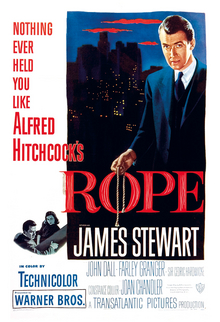
Fig 1. The movie poster used for 'Rope'


'Rope' (1948) is an Alfred Hitchcock film that was based upon a play that also goes by the name of 'Rope'. Throughout this films a variety of different shots have been used to make the audience immersed into the story, most of the shots used within 'Rope' were experimental and were exploited to add effect to the film. For example Hitchcock wanted 'Rope' to seem like one whole continuous shot "All of the events had to take place in one uninterrupted act, and he arrived at the novel idea of shooting the movie without any visible cuts." (Ebert, 1984) Other pieces of clever camera work are used throughout 'Rope' an example would be the fact that Hitchcock ensures that he points the camera and all of the useful information throughout the film. 


Fig 2. Brandon and Phillip murdering the man with rope.

'Rope' begins with an ear piercing scream of a man being murdered in cold blood by Brandon and Phillip. As we get in closer to the scene of the murder it's clear that the murder weapon that is used is where the film got its name from. (See Fig 2.) After killing the man, his corpse is thrown inside of a storage space and covered with a table cloth and candles to mask the make shift burial  (See fig 3.) and "Instead of hiding themselves, or the evidence of their crime, they throw a party, inviting the dead man's loved ones to sip champagne and make small talk." (Hutchinson, 2012). It's almost as if Brandon and Phillip are hosting a funeral for his unsuspecting family and to make the whole situation colder he is not showing any remorse but instead talking with the family and friends as though nothing has happened.

Fig 3. Brandon and Phillip standing above the hidden corpse

It may feel like a painstakingly long time that we are waiting for justice to be served to the killers in 'Rope', but this is the way that Hitchcock builds the immersion that we as a crowd get drawn in by, with each moment that goes by, Brandon feels he is growing ever closer to escaping and not being revealed. But it is his friend Phillip that begins to crack under the pressure and eventually confesses to the last remaining guest, this comes as a sort of release for the audience as throughout the film there are small hiccups that suggest they are going to get caught, which keep us on the edge of our seat. When they are finally caught a gunshot is fired to alert the police the character sit and await justice. The film ends there.

During the 1940's it was a very controversial thing to be homosexual. It's in this movie that we can see a large amount of homosexual subtext that has been written in for Brandon and Phillip. "The film is crammed with submerged gay imitations" (Croce 2006) The cigarette that is lit and smoked after the murder has been carried out is a huge piece of homosexual sub context, its almost as if the moment that Brandon and Phillip shared together when they murdered the man was so sensuous and intimate that one of the men felt a cigarette was needed, much like people tend to do after finishing intercourse. (See Fig 4.)

Fig 4. The moment when Brandon lights a cigarette after the murder
In conclusion it can be said that 'Rope' is an unsung hero in terms of Hitchcock movies. What Hitchcock was trying to achieve with his continuous shot was ahead of it's time and sadly couldn't be achieved in those times due to a technological disadvantage. Some can agree that if 'Rope' was to made with today's technologies it would make for a more immersive and great suspenseful movie. 

 Bibliography

Ebert, R. (1984) 'Rope' At: http://www.rogerebert.com/reviews/rope-1948 Accessed 23/1/2016

Hutchinson, P. (2012) 'My Favorite Hitchcock: Rope'  At:  
http://www.theguardian.com/film/filmblog/2012/jul/27/my-favourite-hitchcock-rope 
Accessed: 23/1/2016

Croce, F. F (2006) 'Rope' At: http://www.slantmagazine.com/film/review/rope Accessed: 23/1/2016

Image Sources

Fig 1. Film Poster for 'Rope'; (1948) [poster] At: https://en.wikipedia.org/wiki/Rope_(film) Accessed 23/1/2016

Fig 2. Brandon and Phillip strangle man: (1948) [Film screenshot] At:  https://thehitchcockreport.wordpress.com/tag/rope/ Accessed: 23/1/2016

Fig 3 Brandon and Phillip are standing above the hidden corpse (1948) [Film Screenshot] At:. http://criticsloft.com/rope-1948/ Accessed 23/1/2016

Fig 4. Brandon smoking a cigarette after the murder (1948) [Film Screenshot] At: https://pittqueerfemfilm.wordpress.com/2012/01/15/film-noir-the-rope-that-binds-uncertainty-sex-and-murder/ Accessed 23/1/2016


Friday, 15 January 2016

Cutting Edge | Film Review | La Jetée (The Pier)


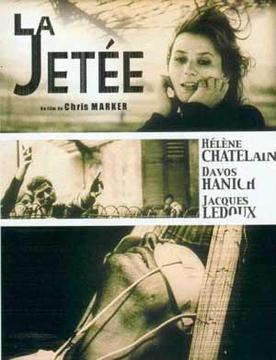
Fig 1. The Movie Cover/Poster of La Jetee


La Jetee (1962) is a French science fiction movie that was directed in 1962 by Chris Marker "whose work fell into the category of thoughtful and challenging" (Patrick Samuel - 2013). It can be said that La Jetee is somewhat of a marvel within the science-fiction movie world. It is also the film that inspired Terry Gilliam to create the movie '12 Monkeys'.

La Jetee does a wonderful job of setting the scene and creating an interesting short movie with the use of purposeful and smart sounds where "The sound effects are minimal and usually represent familiar concepts such as airport sounds or footsteps."(Filmslie.com- 2012) and the use of nothing but still images to depict what is going on throughout the movie. With a runtime of 28 minutes it still manages to tell an interesting story. A story which takes us to the events during the aftermath of World War 3, the whole of Paris has been bombed and nothing remains but a smoking wreckage (See fig 2.). The survivors that we see in this film dwell underground located in the Palais de Chaillot galleries. It's down within these pits where people are conducting experiments on people in the name of discovering something in time travel. It's when we discover that the experiments aren't working on their current human guinea pigs that we meet the main character who is never given a name throughout the movie.


Fig 2. Paris destroyed after World War III

This man is the only man who is able to cope with the effects of the experiments, He willing undertakes the strenuous experiments because he is unable to escape a haunting image that he stills reminisces frequently, a haunting image of a man dying and another image of the woman who watches said death with him. Most of all it is the woman's face that has been etched into his memory (See Fig 3.). 


Fig 3. The woman who is always seen by the unnamed man

Because of the horrific views that can be seen across Paris the scientists send the unnamed man to both the past to the time before the war. The future is also where the unnamed man is transported to. This is so that the present time can return and can be rescued from the disaster that they have been inflicted with. It's when the unnamed man is hurdled into the pre-war era that he meets the unnamed woman and begins to meet her on many occasions, so that he is able to discover what life was like before the war. But through these frequent visits he and her subsequently start to become drawn to each other. The unnamed man is then given a hard choice of fleeing to the distant future of travelling backwards into the past to avoid his execution of which he has now become fully aware of.

The actions that the unnamed man undertakes lead him round in a cycle to a point where he is witnessing the events that first occurred when he was a young boy, which is the point that it is discovered that the man who was seen as young boy was in fact the unnamed man, thus backing up the theory of time and that if an event is to occur it cannot be outrun or changed. The film leaves a purposeful message to the audience, a signifier that we as humans are taking the world for granted and a great "abundance to the past" (Andy Taylor - 2003)  

It can be said the La Jetee proves that to make a impacting, memorable film it doesn't take special effects. It just needs a gripping storyline, a mastery of sounds used and of course the use of still images.


Bibliography

Filmslie.com (2012) Chris Marker’s La Jetee Analysis: Mortality and the Illusion of Time
 At: http://filmslie.com/chris-marker-la-jetee-analysis-temporality/Accessed 14/01/2016

Samuel, P. (2013) La Jetee (Short Film) Review At:  http://staticmass.net/world/la-jetee-1962-review/ Accessed 14/01/2016

Taylor, A. (2003) Andy's Anachronisms - Time Travel Movie Reviews - La Jetee  At :http://www.timetravelreviews.com/movies/la_jetee.html Accessed: 14/01/2016


Image Sources

Figure 1: La Jetee Film Poster (1962) [Poster] At:  https://en.wikipedia.org/wiki/La_Jet%C3% Accessed 14/01/2016

Figure 2: Paris Destroyed after WWIII (1962) [Film Screenshot] At: http://rebeccalpatterson.blogspot.co.uk/2015/01/film-review-la-jetee.html Accessed 14/01/2016

Figure 3: The woman from the unnamed mans memories (1962) [Film Screenshot} At: http://theseventhart.info/tag/la-jetee/Accessed 14/01/2016